
Hypoxic-Ischemic Encephalopathy (HIE) is a type of brain injury caused by a lack of oxygen and blood flow to the brain, often occurring around the time of birth but can sometimes be acquired. Every child with HIE has a unique journey, but many experience long-term neurological impacts that can affect movement, communication, cognition, and sensory processing.
While medical and therapeutic interventions are essential, there is growing recognition of the role music therapy can play in supporting children with HIE and their families in meaningful, life-changing ways.
Understanding the Impact of HIE
HIE can lead to a range of diagnoses, including:
Cerebral Palsy (CP) – impacting movement, coordination, and muscle tone
Epilepsy – involving seizure activity
Vision or hearing impairments
Developmental delays – affecting cognitive, motor, and communication skills
Feeding and oral motor challenges
Because these diagnoses affect multiple areas of the brain, children often benefit from therapies that engage the brain holistically. That’s where music therapy stands out.
How Music Therapy Supports the Brain
Music is processed across multiple regions of the brain simultaneously. This makes it a powerful tool for addressing complex neurological needs.
A board-certified music therapist can use music intentionally to support:
Motor Development
Rhythmic cues can help improve movement, coordination, and timing
Instrument play can encourage reaching, grasping, and crossing midline
Communication & Cognitive Skills
Music creates opportunities for choice-making, turn-taking, and expressive communication
Songs and structure support memory, attention, and routine-building
Sensory Processing
Music provides controlled auditory and vibrotactile input
Instruments like drums can offer full-body sensory experiences
Emotional Regulation & Engagement
Music can calm, motivate, and create a safe space for connection
It often reaches children in ways other therapies cannot
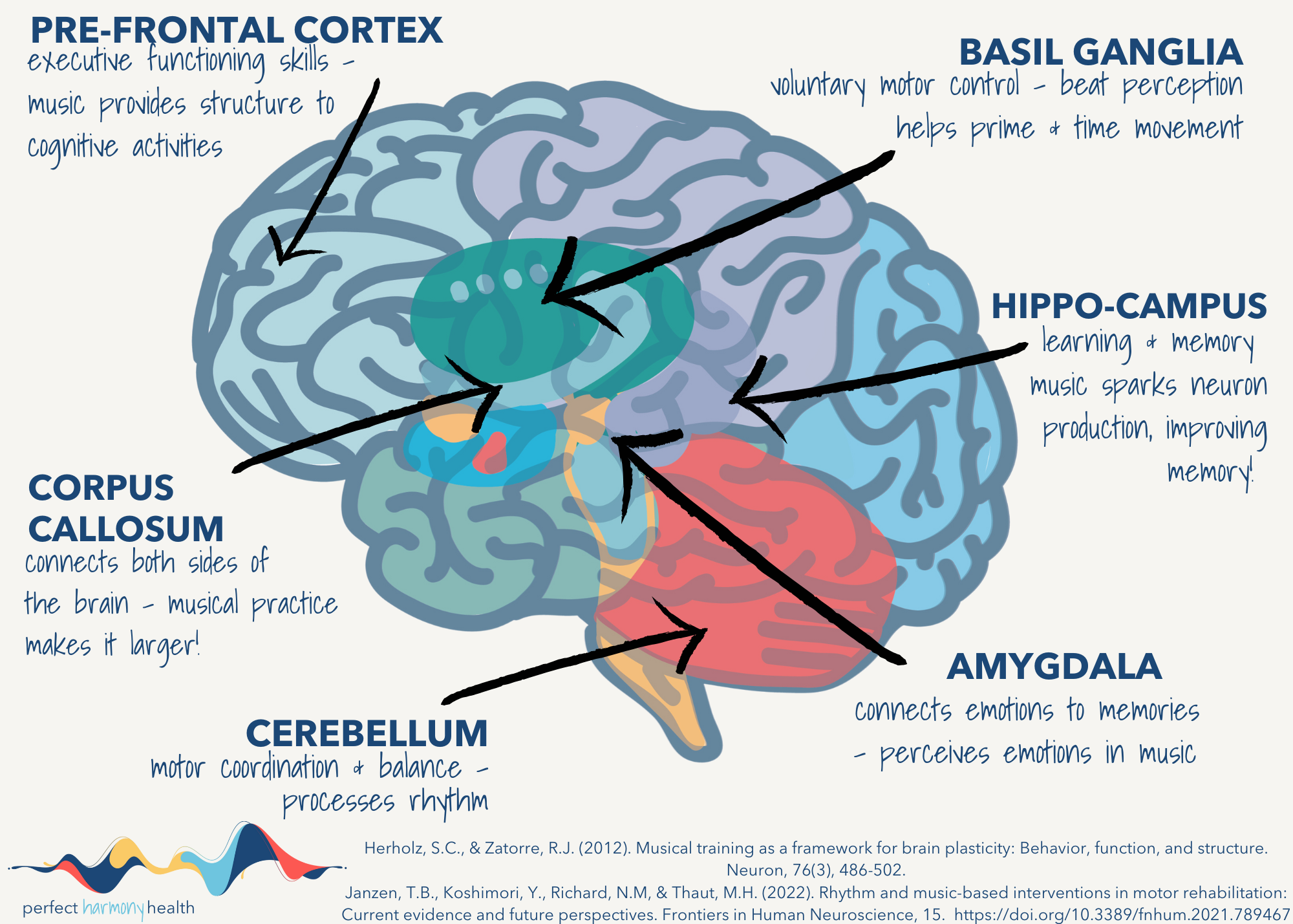
Collaboration with Other Therapies
Music therapy is often most powerful when integrated alongside other services such as physical therapy, occupational therapy, and speech therapy. By pairing music with functional goals, therapists can increase engagement and support progress across disciplines.
Meet Kat!
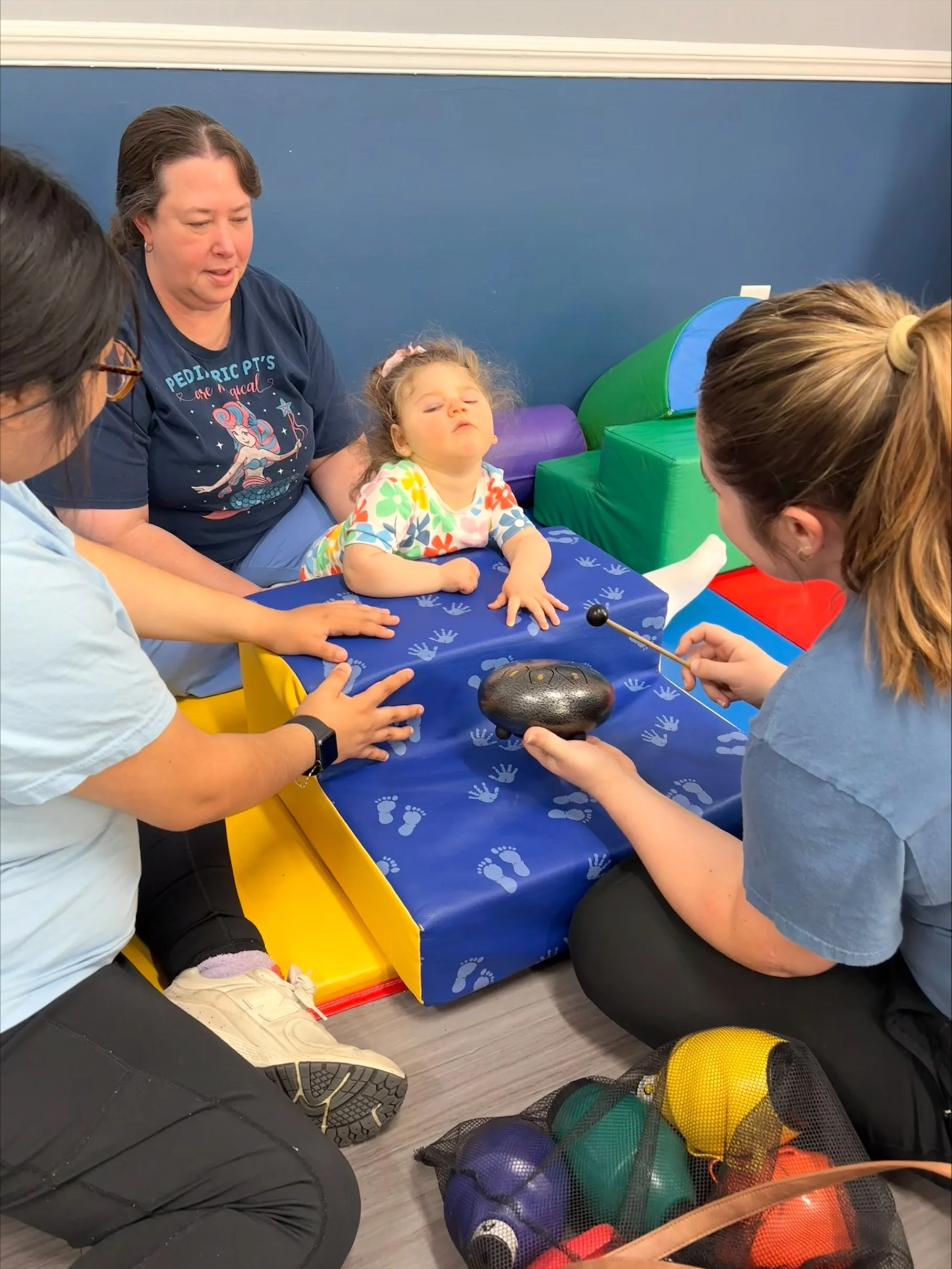
Kat’s journey with music therapy has been a powerful example of how meaningful and neurologically-informed interventions can create real change. During a co-treatment session, her physical therapist noted that while the guitar was being played, Kat held her head up longer than ever before (15 seconds!), something they had been working toward across multiple sessions. Even more striking was the sense of calm that came over her when music was introduced, allowing her to stay regulated and engaged. Because of Kat’s hearing loss, music therapy also incorporates vibrotactile input, and one of her favorite experiences is lying on the drum to feel the vibrations throughout her body. In those moments, her whole sensory system comes alive and so does her joy, reflected in the biggest, most genuine smiles.
HIE may change the path, but it does not limit potential. Music therapy meets children exactly where they are and builds from there which creates moments of connection, progress, and joy that change their access to life.
HIE Resources for Families
Hope for HIE
https://www.hopeforhie.org
Peer support, education, family resources, and global community connection.HIE Help Center
https://hiehelpcenter.org
Easy-to-understand information about HIE, parent resources, and guidance.Child Neurology Foundation
https://www.childneurologyfoundation.org
Support, education, and care navigation for children with neurological conditions.CDC Early Intervention
https://www.cdc.gov/ncbddd/actearly/parents/states.html
Find your state’s Early Intervention program for therapy services (birth–3 years).Family Voices
https://familyvoices.org
Advocacy, support, and resources for families navigating healthcare systems.Parent to Parent USA
https://www.p2pusa.org
Connects families with other parents who have children with similar diagnoses.Social Security Administration
https://www.ssa.gov/ssi
Information about Supplemental Security Income (SSI) for children with disabilities.Medicaid.gov
https://www.medicaid.gov
Healthcare coverage information for children with medical needs.Wrightslaw
https://www.wrightslaw.com
Clear guidance on special education rights, IEPs, and advocacy under IDEA.